By Camille Thrall
In conversations about education, words like rigor, achievement, and preparation often take center stage. For parents who value academic excellence, enrichment programs are evaluated carefully: Is this truly educational? Will my child be challenged? Is this worth their time?
At Kidizens, we believe the answer lies in something both research-backed and deeply human: play-based learning.
High-quality play-based learning is not unstructured free time. It is an intentional, developmentally informed approach that strengthens academic skills, executive functioning, and social-emotional growth—all while children are deeply engaged. When learning is joyful, it becomes more durable, meaningful, and motivating.
This philosophy is the foundation of Kidizens camps and classes for children in kindergarten through fifth grade.
What Is Play-Based Learning?
Play-based learning is an educational approach in which children learn through hands-on exploration, imaginative problem-solving, collaboration, and reflection. Rather than passively absorbing information, children actively construct knowledge by testing ideas, making decisions, and responding to real-time challenges.
Importantly, effective play-based learning is highly structured by design. Educators carefully craft environments, introduce constraints, and guide reflection so that play aligns with specific learning goals.
At Kidizens, play is not the opposite of learning… it is the engine that drives it.
Why Joyful Learning Supports Academic and Emotional Development
From a developmental psychology perspective, kindergarten through fifth grade is a critical period for building how children think, regulate emotions, and relate to others. Learning experiences during these years shape not only what children know, but how they approach challenges for years to come.
Joyful, play-based learning supports development in powerful ways:
- Improved attention and memory: Children stay engaged longer and retain information more effectively when learning is emotionally meaningful.
- Executive functioning growth: Planning, flexibility, impulse control, and problem-solving are continuously exercised during complex play.
- Intrinsic motivation: Children learn because they are curious and invested, not because of external pressure.
- Social-emotional development: Collaboration, leadership, empathy, and communication skills are practiced authentically.
These capacities are strongly associated with long-term academic success, resilience, and confidence.
How Kidizens Applies Play-Based Learning in Practice
Kidizens was created for families seeking enrichment that is both joyful and intellectually substantial. Our programs use city-building, governance, and systems thinking as the core framework for learning.
City-Building as a Learning Model
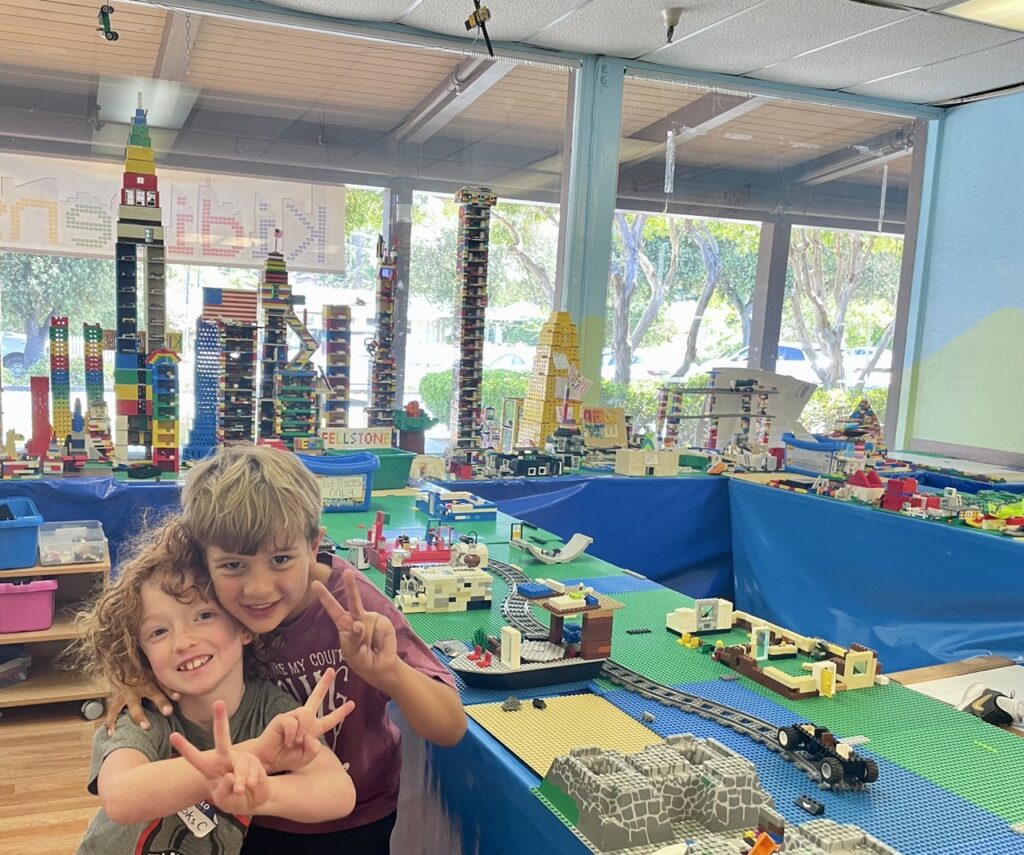
In Kidizens camps and classes, children design and build cities using LEGO and other hands-on materials. But the learning goes far beyond construction.
Children take on roles such as city planners, mayors, engineers, and community members. They make decisions about:
- How resources are allocated
- How laws and rules are created
- How infrastructure supports community well-being
- How to respond to challenges like population growth, environmental concerns, or economic change
Through imaginative play, children engage in advanced problem-solving, critical thinking, and cause-and-effect reasoning.
Academic Skills Embedded in Meaningful Contexts
Rather than teaching academic skills in isolation, Kidizens embeds them into purposeful challenges:
- Math is used to manage city budgets, economies, and trade-offs
- Reading and writing support communication, planning, and persuasive arguments
- Civics and social studies emerge naturally through governance, voting, and leadership roles
Children understand why these skills matter because they are using them to solve problems they care about.
Social Learning Through Collaboration
City-building is inherently collaborative. Children must negotiate ideas, listen to peers, resolve disagreements, and adapt plans. Our educators actively facilitate reflection around teamwork, leadership, and respectful disagreement.
This results in social-emotional learning that feels authentic and practiced—not scripted.
Developmentally Informed Instruction
At Kidizens, we are deeply attentive to how learning environments shape children’s cognitive and emotional growth. Kidizens programs are designed with careful consideration of developmental stages, attention spans, and the balance between structure and autonomy.
Our educators are trained to scaffold challenges, support emotional regulation, and help children build confidence in their own thinking. Children are encouraged to take risks, learn from mistakes, and see themselves as capable problem-solvers.
Play-Based Learning for Families Who Value Excellence
Play-based learning is not a compromise on academic standards—it is a pathway to deeper learning.
When children experience learning as joyful and meaningful, they develop confidence, curiosity, and resilience. They learn how to think, collaborate, and lead. Most importantly, they begin to see learning as something they want to engage in.
At Kidizens, our camps and classes for kindergarten through fifth grade bring together play, academics, and real-world relevance through city-building and imaginative problem-solving.
Because the most powerful learning doesn’t feel like pressure—it feels like possibility.
Interested in Kidizens camps or classes? We invite your child to experience a learning environment where joyful play and deep thinking go hand in hand.